In industrial equipment, home appliance hardware and household supporting fields, rubber pads and silicone pads are widely used basic accessories, with core functions including anti-slip & shock absorption, sealing & waterproofing, buffering & noise reduction, and insulation protection. Many manufacturers frequently encounter mass production issues such as pad collapse, sealing water seepage, shock absorption failure, loose assembly and short service life. Most of these problems are not caused by poor raw materials, but improper hardness selection of gaskets. Many enterprises determine hardness parameters merely based on experience, which easily leads to poor product adaptability, high rework rates and batch scrap, directly affecting product quality and mass production stability. Zhongke Foam provides die-cutting processing for rubber and plastic accessories, and has accumulated rich practical experience for matched die-cutting demands of various gaskets.
There is no universal standard for hardness selection of rubber pads and silicone pads; the selection must fully match actual working conditions. Zhongke Foam offers customized processing of various rubber pads and silicone pads. Drawing on years of supporting experience in gasket die-cutting, we have summarized a mature reference framework for gasket hardness selection. It also serves as a reference for stable mass production projects in the industry, helping enterprises avoid selection pitfalls and stabilize batch production.
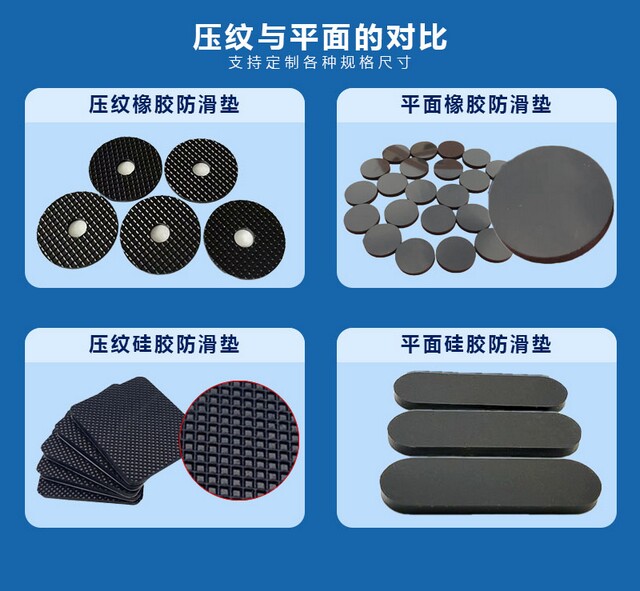
I. Clarify Gasket Application to Lock Core Selection Direction
There is no absolute good or bad for hardness of rubber pads and silicone pads. Matching with working conditions is the priority. The first step of selection is to confirm the core purpose of the gasket, and distinguish whether it is used for equipment sealing, load-bearing shock absorption, anti-slip buffering or insulation protection. Different applications correspond to dedicated products and hardness standards. For example, waterproof rubber sealing gaskets focus on sealing and rebound performance; rubber anti-slip pads for furniture prioritize stable anti-slip effect; silicone anti-slip pads for phone holders and routers feature thin profile, low noise and positioning function. Sealing silicone and rubber gaskets require moderate hardness to guarantee rebound and fitting performance. Over-hard gaskets tend to form gaps and cause leakage, while overly soft ones deform under pressure. Shock-absorbing and anti-slip gaskets need flexible buffering together with shape retention to prevent equipment shaking and abnormal noise. Insulation protective gaskets shall maintain stable hardness to reduce deformation failure after long-term use. Zhongke Foam can complete die-cutting molding of gaskets according to materials and hardness specified by customers, ensuring finished product specifications during processing.
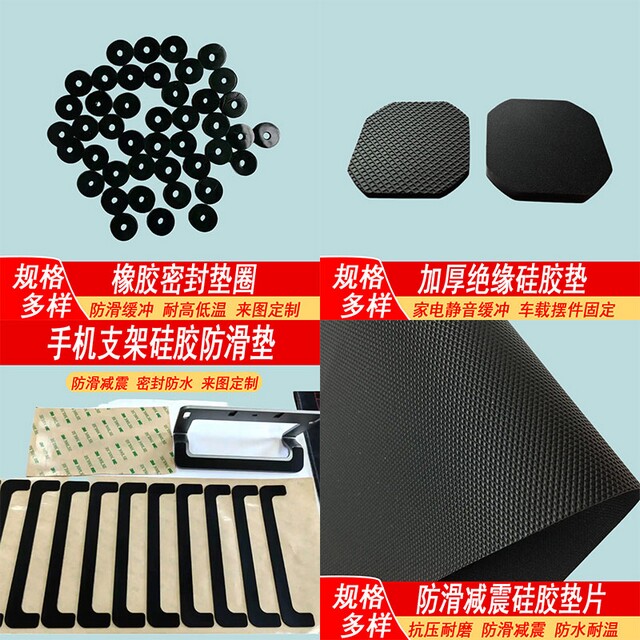
II. Judge Force Mode to Match Suitable Hardness Range
Hardness requirements for rubber pads and silicone pads vary greatly under different force conditions. The second step is to identify the long-term force state of gaskets, and classify working conditions into continuous compression, repeated bending, static load pressure and high-frequency dynamic vibration. For long-term compressed sealing gaskets and equipment buffer pads, excessive hardness may cause cracking and loss of elasticity, while insufficient hardness leads to permanent compression deformation. Anti-slip pads for home appliances and equipment under frequent vibration need balanced hardness. For instance, rubber anti-slip pads for camera brackets and rubber filling shock-absorbing pads for charging bases adopt balanced hardness to realize both shock absorption and structural stability. Heavy-duty equipment and auto parts scenarios require high-toughness materials. Shock-absorbing silicone pads for auto parts and diagonal black shock-absorbing silicone pads adopt rational hardness to avoid collapse and loosening under long-term load, suitable for high-frequency vibration and compression shock absorption scenarios. Zhongke Foam can cooperate with customers to reference working conditions and carry out gasket die-cutting according to selected hardness.
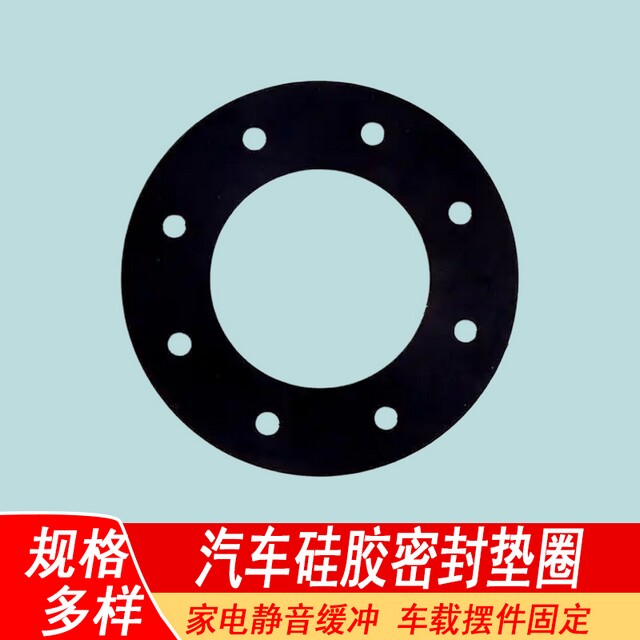
III. Combine Molding Process to Match Gasket Hardness Parameters
Rubber and silicone materials with identical hardness values show different performance for raw sheets of different types. The third step is to confirm base materials according to product requirements, covering die-cut sheet processing to adapt to cutting of various sheet materials. Base materials differ in density and rebound property, resulting in variation in flatness, toughness and dimensional accuracy of gaskets. Zhongke Foam performs die-cutting processing of rubber and plastic sheets. We can cut gaskets according to customer-specified sheets and drawings to guarantee consistent dimensional accuracy of finished gaskets.
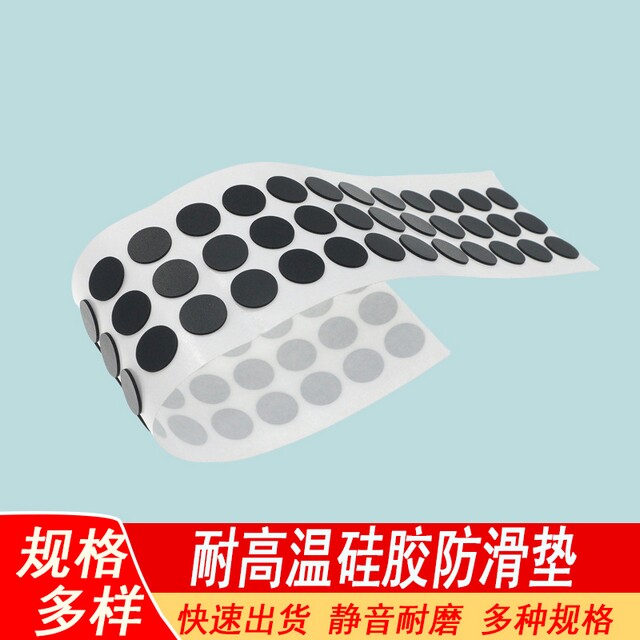
IV. Multi-gradient Sample Testing to Prevent Risks from One-time Finalization
Mature mass production schemes for industrial gaskets never finalize hardness in one attempt. The fourth step adopts multi-gradient sampling logic: select multiple base materials with similar hardness for simultaneous die-cutting and testing according to the application scenario of rubber and silicone pads, especially for customized products. Custom gaskets such as grid silicone pads, temperature and pressure resistant silicone pads and high-temperature shock-absorbing silicone pads have highly targeted working conditions, which require comparison tests among multiple hardness grades. Zhongke Foam can provide small-batch die-cut samples with customer-specified base materials. Customers can visually compare rebound performance, compression resistance, anti-slip fitting, wear and aging resistance of samples, select optimal parameters, effectively avoid mold cost waste, finished product rework and batch scrap caused by improper one-time selection, and greatly reduce mass production risks.
V. Verify under Actual Working Conditions to Confirm Final Mass Production Scheme
After sampling, the final scheme is determined based on three core criteria: assembly fitting degree, dimensional stability and actual working condition adaptability of gaskets. Simulate real working conditions including equipment installation, long-term pressure bearing, high-frequency vibration, humidity and temperature fluctuation, and test whether the gaskets have leakage, loosening, deformation, aging or abnormal noise, so as to gradually select base materials with proper hardness. Zhongke Foam can steadily undertake die-cutting orders of rubber and silicone gaskets according to confirmed schemes.
Conclusion: Precise Selection Enables Stably Mass-produced Gaskets
Well-reputed rubber and silicone pad mass production projects with low rework rate are not perfectly matched at the first selection. They are optimized through scientific selection reference, multi-version sample comparison and working condition verification. Zhongke Foam specializes in matched rubber and plastic die-cutting, and customized non-standard rubber pads and silicone pads, covering all types of industrial rubber and plastic gaskets for household, digital, auto accessory and industrial equipment sectors. We can complete gasket die-cutting processing according to customer-confirmed materials, hardness and drawings, precisely meeting processing demands of various equipment and home appliances, and provide stable customized die-cutting service of gaskets for customers.
#RubberPadSelection #SiliconePadCustomization #GasketHardnessSelection #IndustrialRubberPlasticGasket #CompressionAndExtrusionMolding #LiquidSiliconeRubber #IndustrialGasketMassProduction
Zhongke Foam Rubber Products Co., Ltd., Shunde District, Foshan City
Contact Hotline: +86 133 1833 8520 (WeChat Available) / 133 9277 3528 (WeChat Available)
Tel: 0757-26612516
Website: www.xcp181.com
Address: No.11 Cuizhu South Road, Hongqi Community, Ronggui Subdistrict, Shunde District, Foshan City, Guangdong Province, China
-----------This content was compiled and created with the assistance of AI---------