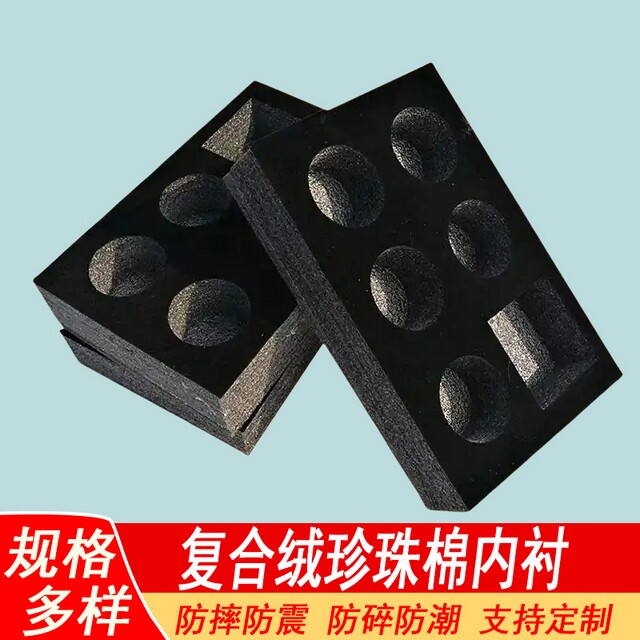
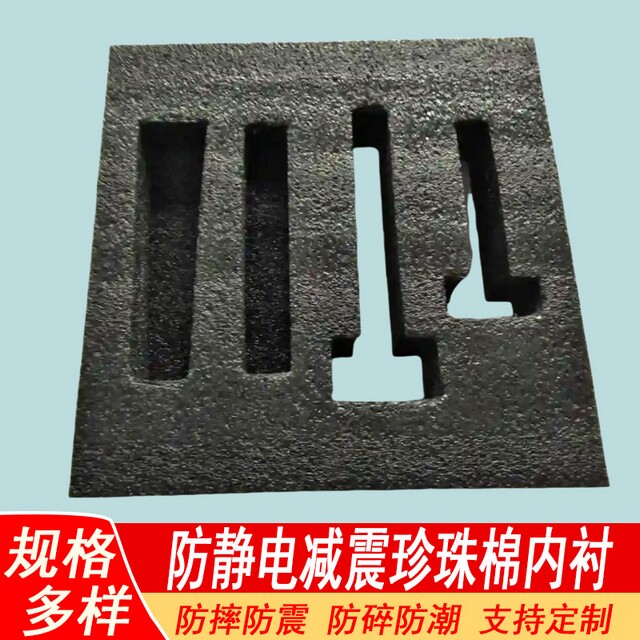
EPE foam (pearl cotton) is widely used for packaging protection of precision instruments and electronic products. The core criteria for procurement and selection mainly include hardness, cushioning performance, anti-static property and surface treatment process. Properly selected EPE foam can effectively absorb shock and protect products. Improper specifications may lead to depression under compression, surface scratches and insufficient protection. Zhongke Foam customizes various EPE foam inserts according to customers’ drawings and samples, including flocked composite EPE foam inserts, anti-static shock-absorbing EPE foam inserts, EPE foam corner protectors and other products.
1. Practical Selection Standards for EPE Foam
When purchasing EPE foam packaging inserts, price should not be the only consideration. Many product collisions and surface scratches are caused by unsuitable EPE foam specifications. Below are key selection points to help buyers avoid common pitfalls.
EPE foam features light weight and soft cushioning feel. Different processing styles can be adopted according to product requirements. There are standard EPE foam as well as flocked composite EPE foam inserts. The flocked surface is soft to prevent scratches on product surfaces. For electronic products, anti-static shock-absorbing EPE foam inserts can be selected to dissipate static electricity and protect circuit boards and chips from static damage.
In terms of load bearing and cushioning: low-density EPE foam with soft texture is suitable for lightweight small gifts and tiny accessories. High-density EPE foam delivers stronger compression resistance and is not prone to collapse after long stacking, ideal for cameras, instruments and heavy hardware parts. Professional EPE foam processing supports grooving and special-shaped cutting to position and fix all types of products.
Cleanliness and protection requirements: Standard EPE foam may generate tiny debris upon friction. For products with high surface appearance requirements, flocked composite EPE foam inserts are preferred to reduce friction scratches. Anti-static shock-absorbing EPE foam inserts are the first choice for electronic components. During customization, optional processes include adhesive backing, integrated grooving and split assembly. Adhesive-backed EPE can be directly attached to the inner side of cartons to prevent displacement. Split inserts enable fast product picking and placement, suitable for assembly line packaging. Bulk orders can start with sampling to verify dimensions and tightness of positioning slots, reducing rework and waste in mass production.
2. Applicable Scenarios & Limitations of EPE Foam
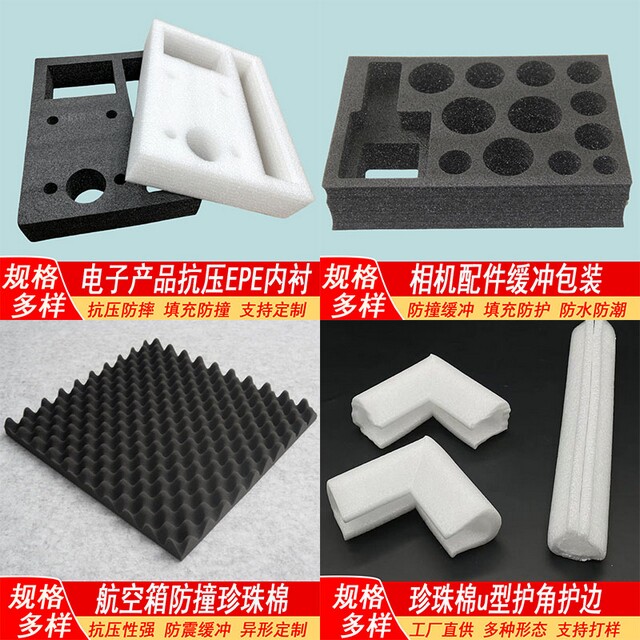
EPE foam has a wide range of applications, including compression-resistant EPE inserts for electronic products, buffer pouches for camera accessories, collision-proof EPE foam for flight cases, watch gift box inserts, positioning EPE foam liners for toolboxes and EPE foam corner guards. It serves packaging protection for electronic goods, optical parts, gift ornaments and instruments, for warehouse storage and long-distance transportation.
Meanwhile, EPE foam has application limitations: it tends to sag and deform under sustained heavy pressure, so it is not suitable for repeated circulation or long-term continuous compression. Friction may produce fine debris, so evaluation is required before use for high-precision optical equipment in dust-free workshops. EPE foam has basic moisture resistance for regular storage environments, but long-term exposure to humid conditions will reduce its elasticity and weaken cushioning performance.
3. Introduction of EPE Foam Product Types
Flocked Composite EPE Foam Insert: Laminated with a flocked layer for delicate touch, preventing scratches on product shells. Widely used in gift boxes for jewelry, watches and precision cosmetic parts, such as watch gift box inserts. Anti-static Shock-absorbing EPE Foam Insert: Formulated with anti-static additives to dissipate static while cushioning. Protects circuit boards and chips, used as compression-resistant EPE inserts for electronic component packaging. EPE Foam Corner Protector: L-shaped design wrapping product corners to resist impact, for anti-collision protection of large panels and cases during shipment. Camera Accessory Buffer Pouch: Integrally formed EPE foam with grooved positioning to separate camera lenses and accessories against bumps. Flight Case Anti-collision EPE Foam: Custom inner liners embedded inside flight cases to secure instruments and absorb shock in transit. Toolbox Positioning EPE Foam Liner: Grooved according to tool contours to lock tools in place and avoid shaking and collision.
4. Common Selection Misconceptions in the Industry (Must-read for Buyers)
Many purchasers fall into these traps:
· Believing thicker EPE foam guarantees better protection. Thick low-density EPE foam gets flattened easily under load and fails to provide firm support. Thin high-density foam lacks sufficient cushioning and leaves products vulnerable to impact. Density and thickness must be matched based on product weight.
· Focusing only on price while ignoring surface treatment. Direct contact of cosmetic parts with ordinary EPE foam may cause friction scratches during transit. Products such as watches and cameras are recommended to use flocked composite EPE foam inserts to preserve surface finish.
· Neglecting anti-static requirements. Standard EPE foam has no static dissipation capability. Anti-static shock-absorbing EPE foam inserts are mandatory for electronic component packaging to avoid static damage to circuit boards.
· Overlooking the tightness of positioning slots. Over-wide grooves allow products to shake and collide during shipping; over-tight grooves slow down picking and reduce packaging efficiency. Simulated packing tests are recommended during sampling to adjust groove clearances.
5. Summary
Overall, EPE foam is lightweight with excellent cushioning performance. It can be fabricated into flocked composite EPE foam inserts, anti-static shock-absorbing EPE foam inserts, EPE foam corner guards, compression-resistant EPE inserts for electronics, camera accessory buffer pouches, flight case anti-collision EPE foam, watch gift box inserts, toolbox positioning EPE foam liners and more, for gift box, electronics, instrument and flight case packaging. Proper selection of density and process protects products while controlling procurement costs. Zhongke Foam provides die-cutting services and can cut all kinds of EPE foam inserts according to confirmed customer drawings and dimensions.
6. Q&A
Q1: What products require anti-static EPE foam? A1: Anti-static shock-absorbing EPE foam inserts are recommended for packaging circuit boards, chips and other electronic products. Standard EPE foam works for common hardware, gifts and crafts. Zhongke Foam can customize anti-static EPE foam as requested.
Q2: Can EPE foam be reused? A2: Ordinary EPE foam deforms easily under compression and is mostly for one-time or short-term circulation. High-density thickened EPE can be reused a few times, but not for repeated heavy compression over long periods.
Q3: How precise is EPE foam processing? A3: Precision die-cutting supports grooving and special-shaped cutting per drawings to produce irregular liners including toolbox positioning EPE foam liners and watch gift box inserts, meeting protection demands of various non-standard products. Zhongke Foam offers small-batch die-cut sampling service.
Zhongke Foam Rubber Products Co., Ltd., Shunde District, Foshan City
Contact Hotline: +86 133 1833 8520 (WeChat Available) / 133 9277 3528 (WeChat Available)
Tel: 0757-26612516
Website: www.xcp181.com
Address: No.11 Cuizhu South Road, Hongqi Community, Ronggui Subdistrict, Shunde District, Foshan City, Guangdong Province, China
-----------This content was compiled and created with the assistance of AI---------