For industrial and vehicle sealing material selection, the core criteria are working condition adaptation, weathering stability and long-term deformation control. There are many types of automotive sealing strip materials with large performance differences. For engineering procurement, project supporting and equipment modification, materials shall be selected as required to effectively avoid after-sales problems such as material aging, water leakage, dust ingress and sealing abnormal noise. Zhongke Foam provides a full range of sealing strips including EVA, EPDM, CR, PU, PE, SBR and NBR sealing strips, as well as silicone sealing strips. Custom processing is available for self-adhesive backing sealing strips, special-shaped sealing strips and round sealing strips to meet bulk supporting demands for vehicle-mounted and industrial sealing strips.
1. Core Principles of Engineering Material Selection: Prioritize Working Conditions, Avoid Universal Material Selection
Industrial sealing material selection is not based on general popularity, but on working condition matching. Ordinary civil materials cannot adapt to harsh environments such as vehicle-mounted high and low temperature alternation, frequent opening and closing, and outdoor sun exposure, and are prone to aging failure and high failure rate. For automobile factory supporting, vehicle modification and equipment sealing projects, four key indicators including high and low temperature resistance, deformation resistance, aging resistance and sealing accuracy shall be assessed. Only accurately matched materials can guarantee stable long-term service.
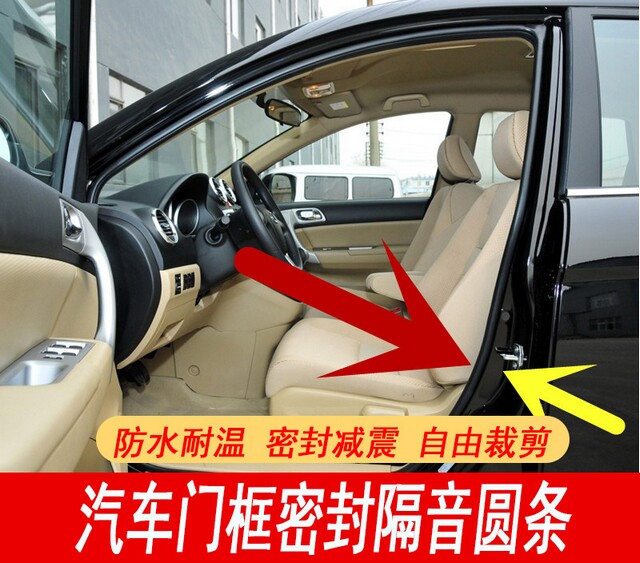
2. Engineering Adaptation Positioning and Technical Advantages of Each Material
EPDM (Ethylene Propylene Diene Monomer) Rubber Sealing Strip: The mainstream supporting material for automobiles. It works within a temperature range of -50℃ to 80℃, featuring excellent ozone resistance, UV resistance, crack and deformation resistance, and outstanding rebound stability. It can withstand frequent extrusion of vehicle doors for a long time. It is odorless with low deformation rate, suitable for bulk supporting of complete vehicle sealing. It is the preferred material for OEMs and modification projects, boasting long service life and low after-sales failure rate.
Silicone Sealing Strip: Suitable for local high-temperature working conditions. It has strong temperature resistance, is environmentally friendly and odorless, and resists discoloration and aging. It is mostly used for auxiliary sealing in high-temperature areas of vehicle engine compartments. However, its tear resistance and fatigue resistance are average; it tends to get damaged under long-term repeated extrusion. It is not suitable for large-area sealing of the whole vehicle, only for special high-temperature scenarios.
EVA Sealing Strip: Lightweight material dedicated to dust prevention and buffering. Flexible and lightweight with uniform sealing performance, clean and dust-free. It fits vehicle interior dust prevention and silent buffering scenarios, and can be used stably for a long time in dust-free and low-load working conditions.
CR Sealing Strip / PU Sealing Strip: Precision flame-retardant materials with high fitting performance. CR material is wear-resistant and flame-retardant with stable structure, suitable for fire-proof sealing scenarios; PU sealing strip delivers tight rebound and high fitting accuracy, ideal for narrow gaps and precision equipment sealing working conditions.
NBR Sealing Strip / SBR Sealing Strip: Oil and wear resistant dedicated materials. It shows excellent oil resistance, tensile resistance and friction resistance, suitable for vehicle chassis and parts exposed to oil contamination and frequent wear. It prevents corrosion, aging and falling-off failure of ordinary rubber.
PE Sealing Strip: Cost-effective material for moisture-proof and anti-corrosion applications. It resists moisture and corrosion with stable structure and high cost performance, applied in conventional moisture-proof and low-load sealing scenarios, perfect for large-batch economical supporting projects.
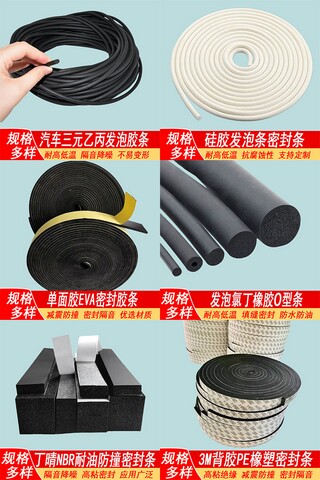
3. Common Misconceptions and Pitfall Avoidance in Engineering Material Selection
Blind adoption of universal materials is the main cause of failure in bulk sealing projects. Misusing silicone or ordinary rubber for the whole vehicle easily leads to poor fitting, water seepage, abnormal noise and insufficient durability, raising after-sales costs. Meanwhile, inferior reclaimed rubber materials shall be avoided. Such products have poor weather resistance, tend to crack and retain residual odor, failing to meet supporting standards for industrial and automotive applications. For engineering supporting, materials shall be selected according to segmented working conditions such as high temperature, wear resistance, oil resistance and precision fitting, implementing one material for one working condition.
4. Working Condition Adaptation Selection and Bulk Supporting Solutions
For complete vehicle sealing and long-term vehicle supporting, EPDM rubber sealing strips are preferred. With balanced comprehensive performance, they adapt to full temperature range working conditions and meet automobile factory supporting standards. Select materials precisely for segmented scenarios: silicone sealing strips for high-temperature zones, EVA sealing strips for interior dust prevention, CR/PU sealing strips for precision flame-retardant use, NBR/SBR sealing strips for oil-contaminated and wear-prone parts, and PE sealing strips for conventional moisture-proof applications.
Zhongke Foam provides custom processing for all material types. Self-adhesive backing sealing strips, special-shaped cut sealing strips and round strip sealing strips can be manufactured to fit various non-standard sealing gaps. Sample trial production and bulk supply are supported to achieve standardized delivery for engineering projects.
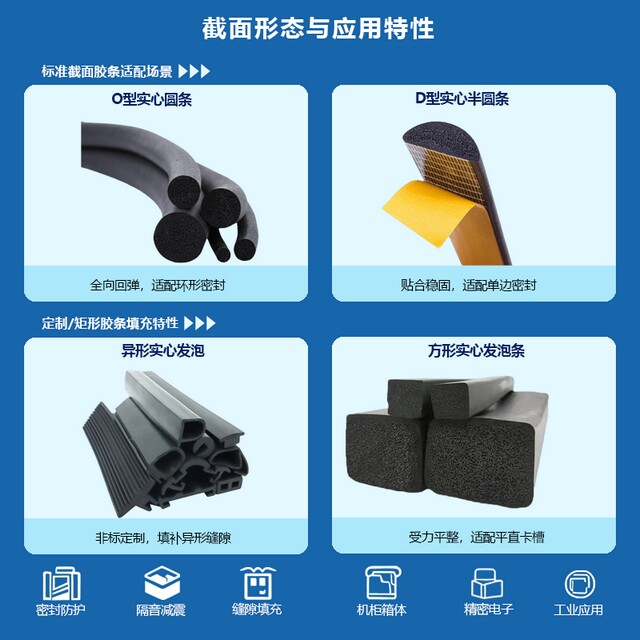
5. Summary of Material Selection
The core of automotive sealing strip selection lies in working condition matching, qualified parameters and stable bulk supply. EPDM sealing strip serves as the main material for full-scenario automotive applications, while other materials cover demands of various segmented working conditions. With a full-material product portfolio and custom processing capacity, Zhongke Foam can solve various sealing adaptation challenges, reduce after-sales risks and guarantee stable quality for bulk delivery.
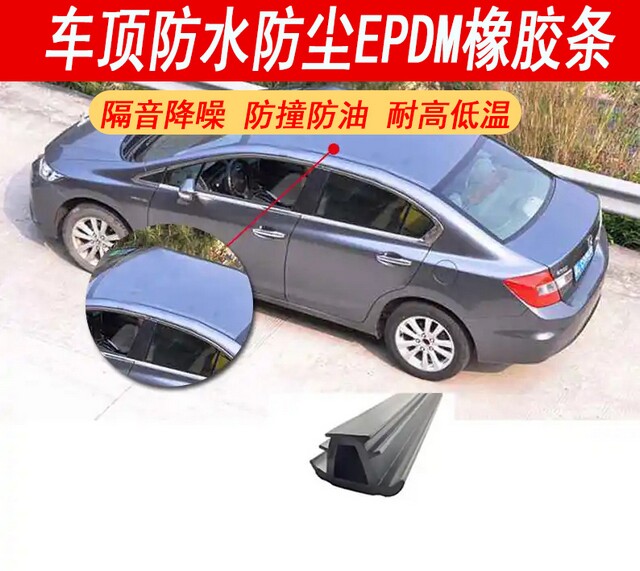
6. Frequently Asked Questions for Engineering Material Selection (General for Procurement)
1. Which material is preferred for bulk vehicle supporting? For conventional complete vehicle sealing and outdoor high-low temperature alternating working conditions, EPDM rubber sealing strip is the top choice. It features outstanding weather resistance and rebound stability, suitable for long-term automotive use with low failure rate.
2. Can non-standard gaps be customized? Zhongke Foam supports customization of non-standard sealing strips. All material options can be made with adhesive backing, special shapes or round profiles to fit various gaps of vehicles and industrial equipment. Sample trial orders and bulk supply are available.
3. How to select materials for special working conditions? Choose NBR/SBR sealing strips for oil-contaminated and wear-prone areas, silicone sealing strips for local high-temperature zones, EVA sealing strips for dust-free clean environments, and CR/PU sealing strips for precision flame-retardant scenarios to precisely match different working conditions.
4. What is the difference between industrial grade and ordinary grade? Industrial grade virgin materials have low deformation rate and strong weather resistance. They will not crack, collapse or release odor and dust after long-term use, adapting to harsh working conditions and greatly cutting after-sales rework costs.
Zhongke Foam Rubber Products Co., Ltd., Shunde District, Foshan City
Contact Hotline: +86 133 1833 8520 (WeChat Available) / 133 9277 3528 (WeChat Available)
Tel: 0757-26612516
Website: www.xcp181.com
Address: No.11 Cuizhu South Road, Hongqi Community, Ronggui Subdistrict, Shunde District, Foshan City, Guangdong Province, China
-----------This content was compiled and created with the assistance of AI---------