In the fields of 3C digital products, household appliances, industrial electronic control and precision electronics maintenance, electronic and electrical foam strips serve as core functional supporting consumables. Common equipment failures such as dust ingress, moisture exposure, loose components and operating noise, electromagnetic interference are mostly not caused by movement assembly or circuit faults, but inadequate gap sealing and buffer protection. Accurate selection of foam strips matching working conditions can effectively improve equipment stability, extend service life and reduce maintenance costs.
Electronic equipment features sophisticated internal structures and is subject to alternating temperature changes, high-frequency vibration, dust and moisture erosion over long-term operation. Ordinary foam strips tend to age, collapse, shed powder and lose insulation performance, failing to meet long-term operating requirements. With years of experience in supporting electronic consumables, Zhongke Foam has built standardized foam strip selection and matching solutions for various household appliances, precision electronics and electronic control equipment, suitable for both production assembly and equipment maintenance scenarios.
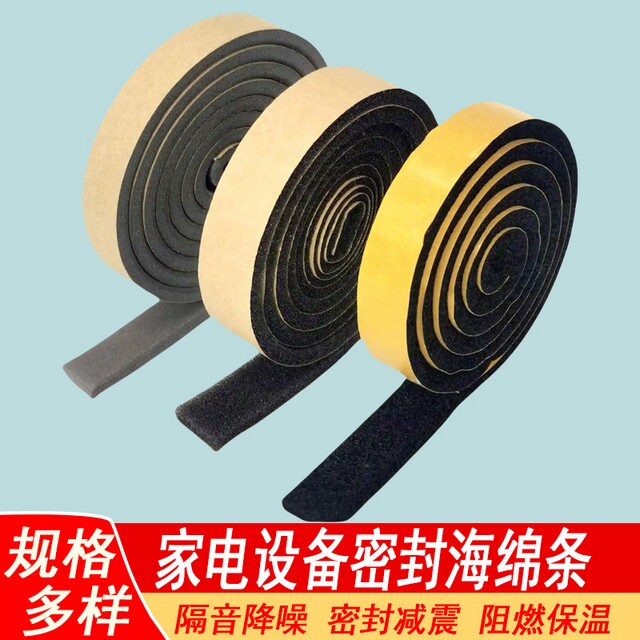
I. Four Core Functions of Electronic & Electrical Foam Strips
Different from general filling materials, electronic dedicated foam strips are tailored to the operating characteristics of electrical equipment and integrate multiple protective functions to fully guarantee stable equipment operation.
1. Dustproof & Moisture-proof Sealing: Fill gaps on equipment housings, panels, cabinet doors and wire holes to block dust, moisture and oil fume. It prevents circuit boards, chips and terminals from oxidation and short circuits due to dust and moisture, protecting the safe operation of precision electronic components.
2. Vibration Damping & Noise Reduction, Component Stabilization: Absorb high-frequency vibration generated during equipment startup, shutdown and operation. It fills gaps between parts to avoid hard contact between hardware and software, preventing loose components and falling screws. It effectively reduces resonance noise and maintains intact movement structures.
3. Insulation & Heat Isolation for Safety Protection: Excellent insulating performance isolates circuit gaps to avoid electric leakage and short-circuit risks. It also blocks local high-temperature conduction and slows thermal aging of components, suitable for long-term powered operation of household appliances and electronic control units.
4. Electromagnetic Shielding & Signal Stabilization: Custom conductive foam strips shield high-frequency electromagnetic interference of equipment, solving signal disorder, transmission distortion and static accumulation. Widely adopted in precision digital, communication and industrial control equipment to ensure stable signal transmission.
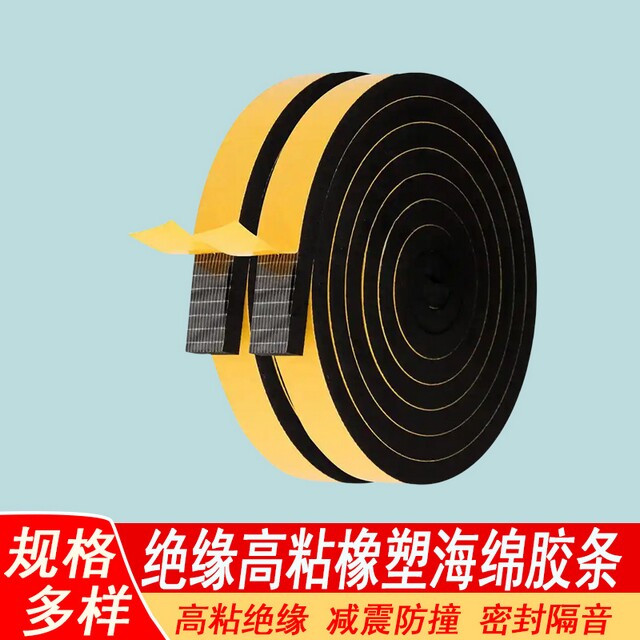
II. Mainstream Foam Strip Materials and Matching for Electronic & Electrical Scenarios
Electronic equipment varies greatly in working conditions, with distinct requirements for sealing, shock absorption, temperature resistance and insulation of foam strips. Mainstream industrial foam strips fall into three categories: general conventional type, weather-resistant special type and function-specific type. Precise material selection according to equipment working conditions avoids drawbacks of general consumables.
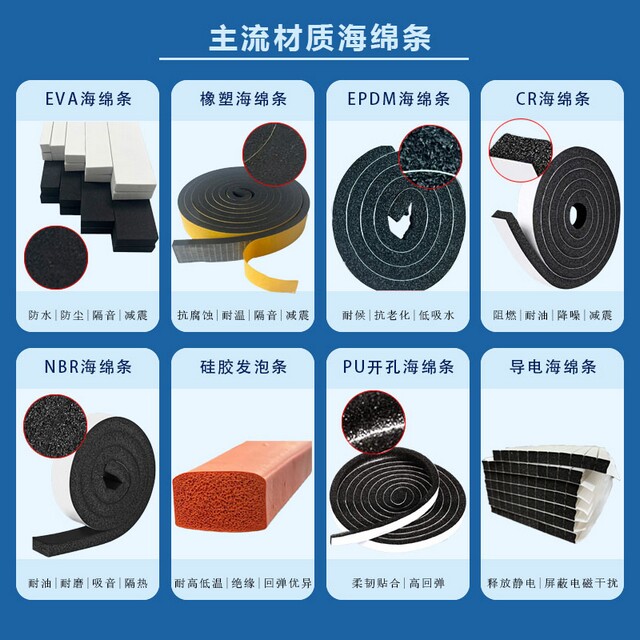
1. General Conventional Materials: EVA foam strips and rubber-plastic foam strips, suitable for civilian household appliances and ordinary electronic control equipment. Closed-cell EVA features dense waterproof structure, light weight and good aging resistance, with self-adhesive backing for easy assembly. It fits gap filling for televisions, air conditioners and other small household appliances. Rubber-plastic materials have moderate hardness, corrosion resistance, temperature resistance and crack resistance with high cost performance. They are used for standardized mass assembly of conventional household appliances and low-voltage electronic control cabinets to meet basic dustproof, shockproof and heat insulation demands.
2. Weather-resistant Special Materials: Silicone, EPDM, CR and NBR foam strips, applied in harsh environments with high temperature, humidity and oil contamination. Silicone boasts outstanding high & low temperature resistance, insulation and resilience for high-temperature household appliances and electronic control devices under alternating temperature. EPDM delivers weather resistance, anti-aging performance and low water absorption, ideal for outdoor cabinets and communication electronics. CR is flame retardant and oil resistant with good buffer and noise reduction performance, used for equipment panels and cabinet doors with frequent opening and closing. NBR features oil resistance, wear resistance, heat insulation and sound absorption, designed for kitchen appliances and industrial oil-contaminated live equipment protection.
3. Function-specific Materials: PU open-cell foam strips and conductive foam strips for special protection of precision electronics. PU material is flexible and conformable without debris shedding. It fills irregular tiny gaps to protect precision instruments and small digital components, adapting to clean assembly environments. Conductive foam strips dissipate static electricity and shield electromagnetic interference. Deployed on mainboards and communication devices to eliminate signal disorder and ensure stable operation of precision equipment.
III. Common Selection Mistakes & Tips to Avoid Pitfalls
Most selection errors arise from improper use of universal foam strips. Ordinary consumables have poor temperature tolerance, prone to aging, tackiness and powder shedding, which may contaminate circuits and trigger short circuits. Over-hard materials may squeeze precision parts, while overly soft ones lack sufficient support, resulting in failed sealing and shock absorption. Long-term use leads to dust penetration, abnormal noise and frequent failures with potential safety hazards.
Zhongke Foam matches foam strips with proper hardness, density and temperature resistance according to equipment working parameters including temperature variation, vibration, sealing requirement and cleanliness. It eliminates matching problems at the source to ensure long-term stable equipment operation.
IV. Non-standard Customization for High-end Electronic Working Conditions
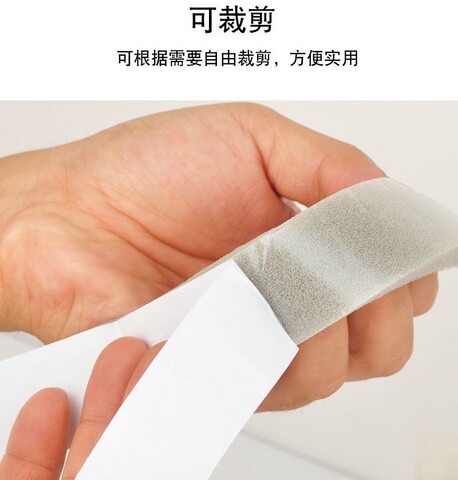
Standard foam strips have fixed specifications and cannot fit irregular gaps, micro precision components and automated electronic control equipment. For high-end electronics and customized household appliances, Zhongke Foam offers customized thickness, width, hardness, adhesive backing and cutting processes for foam consumables, meeting demands of non-standard precision assembly, equipment maintenance and new machine supporting.
Foam strips are indispensable protective consumables for electronic and electrical equipment, directly determining sealing performance, safety and service life. Proper selection of electronic & electrical foam strips based on working conditions effectively solves problems including moisture and dust ingress, operating noise, loose components and signal interference. It cuts maintenance costs and provides reliable protective support for long-term operation of various electronic and electrical devices.
#ElectronicElectricalFoamStrip #EVAFoamStrip #PUOpenCellFoamStrip #ConductiveFoamStrip #EPDMFoamStrip #CRFoamStrip #NBRFoamStrip #RubberPlasticFoamStrip #ElectronicEquipmentShockAbsorbingFoamStrip #PrecisionInstrumentProtectiveConsumables
Zhongke Foam Rubber Products Co., Ltd., Shunde District, Foshan City
Contact Hotline: +86 133 1833 8520 (WeChat Available) / 133 9277 3528 (WeChat Available)
Tel: 0757-26612516
Website: www.xcp181.com
Address: No.11 Cuizhu South Road, Hongqi Community, Ronggui Subdistrict, Shunde District, Foshan City, Guangdong Province, China
-----------This content was compiled and created with the assistance of AI---------