Sound insulation cotton is widely used, yet buyers often focus only on the term “sound insulation” during procurement while ignoring substrate characteristics. This leads to unsatisfactory noise reduction, moisture-induced mildew, and material aging. It is critical to distinguish first: sound insulation blocks sound transmission by mass and sealing, while sound absorption dissipates reflected sound energy through porous structures. Before material selection, clarify whether you need to stop sound from passing in or out, or reduce echo and reverberation indoors, then match materials to the required function.
Common materials are grouped into foam types and fiber types. Foam materials are further subdivided by pore structure below.
I. Foam Materials: Two Categories by Pore Structure
All foam materials are formed by polymer foaming, yet vastly different performance comes from distinct pore structures. Closed-cell foam has disconnected pores. Its acoustic benefits mainly lie in damping vibration, sealing gaps and blocking airborne sound transmission. Open-cell foam features interconnected pores. Sound waves enter the pores and convert into heat energy via friction. As a porous sound-absorbing material, it primarily reduces echo and reverberation.
(A) Closed-cell Foam: Rubber Foam and EVA for Vibration Damping and Sealing
Rubber foam adopts a closed-cell structure. It is mainly used to block airborne sound and provide vibration damping, with good moisture resistance. Dense and flexible, it fits closely around pipes and enclosures, resists water absorption and mildew, and maintains stable weather resistance without hardening or cracking over time, making it suitable for outdoor locations and environments with large temperature fluctuations. It can be die-cut into pipe jackets, equipment gaskets and cabinet sealing strips, and is also available with adhesive backing. Note: The sound insulation performance of rubber foam depends on density and thickness. Single thin sheets offer limited sound blocking. For high sound insulation requirements, it works best as an auxiliary material for sealing and damping, paired with sound insulation enclosures and barriers instead of serving as the primary sound insulation material. Rubber foam is a reliable option for water supply pipes, ventilation shafts and outdoor control cabinets where both sound insulation and moisture resistance are required.
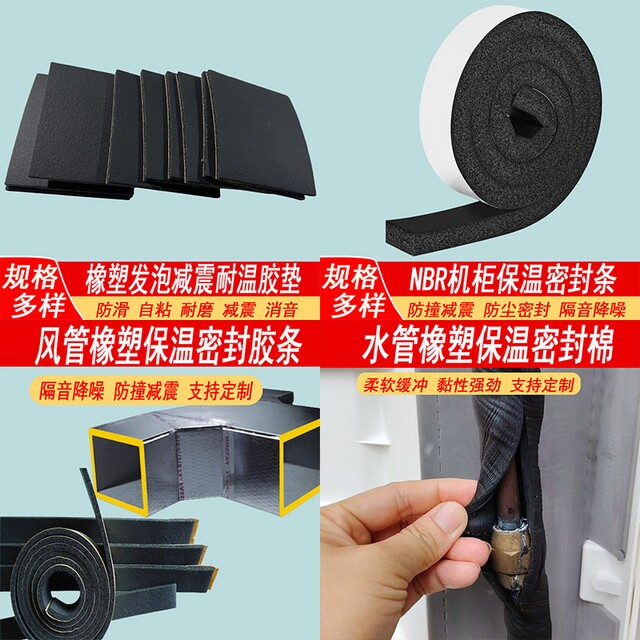
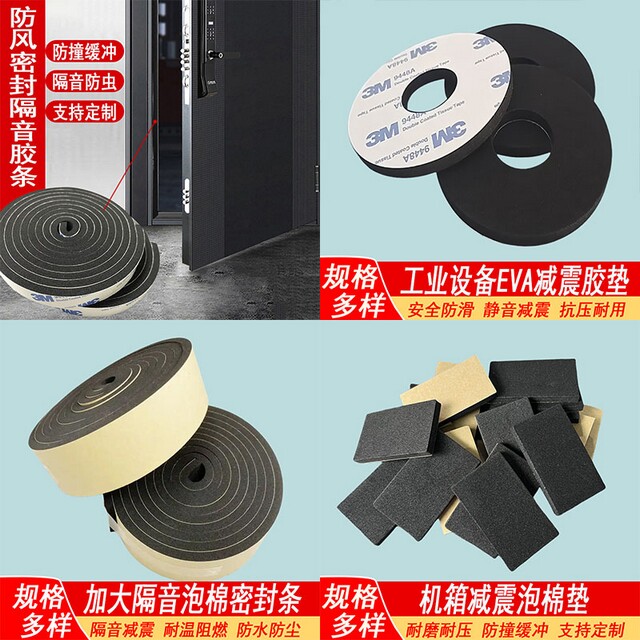
EVA foam is also closed-cell. Its core functions are vibration buffering, damping to suppress structure-borne noise and dust sealing, while its airborne sound insulation capacity is limited. It features excellent moldability and can be die-cut into irregular noise-reducing gaskets, widely applied inside electrical appliances, on equipment bases and in cabinet gaps to eliminate vibration noise. Hardness and thickness are adjustable, and cutting is flexible for customized small noise reduction components. Compared with rubber foam, EVA focuses more on vibration buffering and precision assembly, while rubber foam excels at pipe wrapping, moisture-proof sealing and weather resistance. Choose based on whether frequent disassembly is needed and whether the part will be exposed outdoors. EVA can also form composite structures with rubber foam or fiber cotton.
(B) Open-cell Foam: Polyurethane and Melamine Foam for Sound Absorption with Different Flame Retardancy
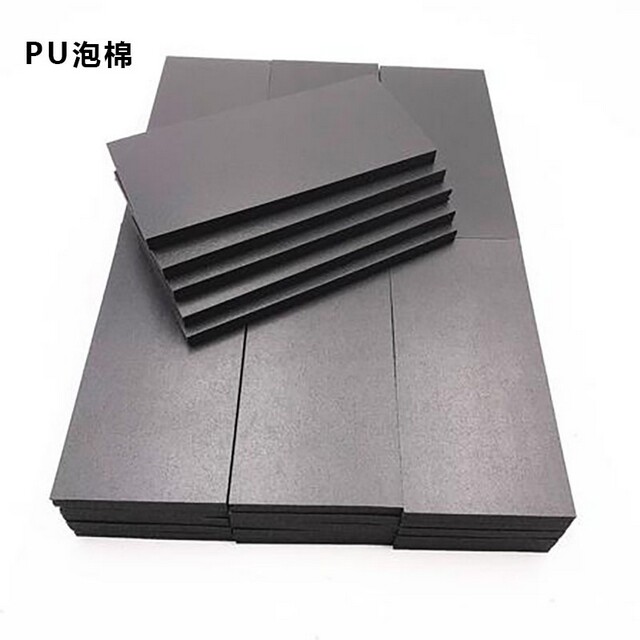
Polyurethane Foam (PU Foam) Mostly open-cell, it converts sound wave energy into heat through internal pore friction and delivers good sound absorption, alongside cushioning, filling and lightweight properties. It is commonly used as lining inside equipment housings, industrial noise reduction filling and sound-absorbing cushioning within home appliances. Lightweight and easy to cut, it can be die-cut to match cavity shapes. Purchase tips: Open-cell ratio, density and thickness directly determine sound absorption performance. Standard grades have limited flame resistance. For fire-risk scenarios, select flame-retardant modified grades and request test reports. Different from EVA which targets vibration sealing, polyurethane foam is oriented toward sound absorption and cushion filling.
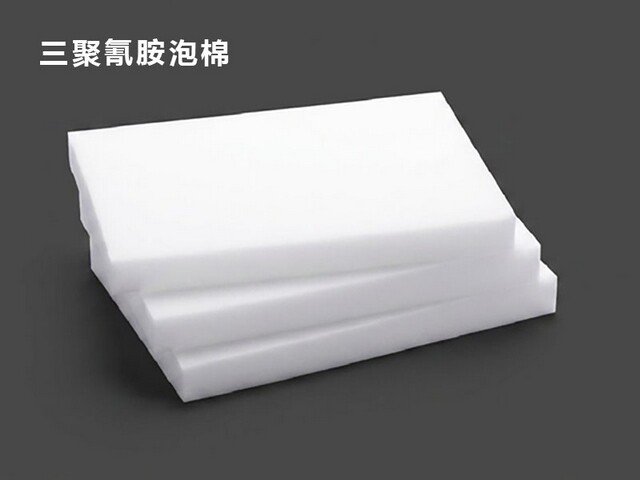
Melamine Foam It has an extremely high open-cell ratio and outstanding sound absorption. It features intrinsic flame retardancy — the fire resistance comes from its material structure instead of extra flame retardant additives, reaching high fire ratings. It is lightweight, stable across wide temperature ranges, moisture-proof and mildew-resistant. It is widely used for flame-retardant sound absorption in rail transit, buildings and equipment noise control. Purchase tips: Verify flame retardant class and sound absorption coefficient through official test reports. It is relatively brittle and carries higher cost, so it fits applications requiring both fire safety and sound absorption without frequent disassembly. Compared with polyurethane foam, melamine foam’s strength lies in combined sound absorption and intrinsic flame retardancy, whereas polyurethane foam is better for sound absorption plus cushion filling.
II. Fiber Materials: Polyester Fiber Sound Absorption Cotton for Indoor Reverberation Reduction
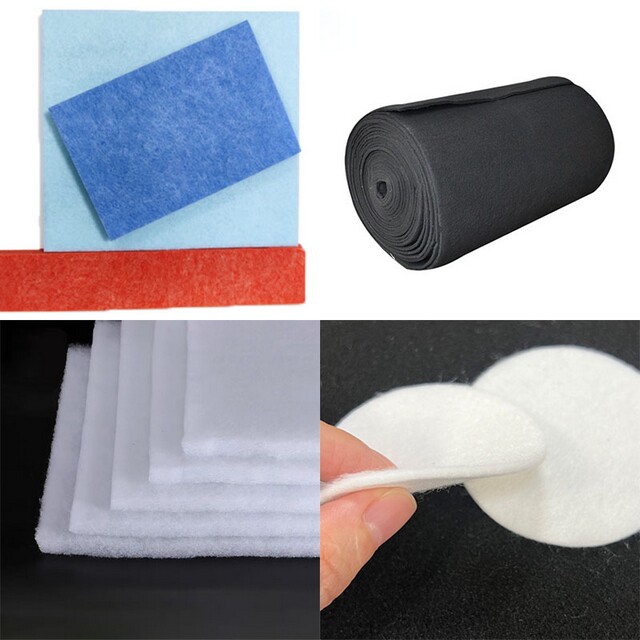
Polyester fiber sound absorption cotton captures sound waves through fine pores with balanced and stable acoustic performance. It is widely used for wall cavity filling, machinery room sound treatment and speaker chamber tuning to reduce indoor echo and reverberation, and is also adopted in home theaters and recording studios as wall sound-absorbing layers. A wide selection of densities and thicknesses is available, with different weights corresponding to varied absorption capacity, and it is cost-effective for large-area filling. Purchase tips: High-quality polyester fiber cotton generates low irritating dust, while low-cost recycled materials may carry odor and VOC issues; always ask for test reports. Polyester fiber has limited natural flame resistance, so choose flame-retardant modified variants and confirm the fire rating.
III. Material Selection for Different Working Conditions
Prioritize rubber foam for damp pipelines and outdoor environments; EVA foam for equipment vibration damping and precision electrical noise control; polyester fiber cotton for indoor sound absorption and recording spaces; polyurethane foam for equipment housing lining and open sound-absorbing cushioning; melamine foam when high standards for both flame resistance and sound absorption apply. Multiple materials can be combined to create composite systems integrating sound insulation and sound absorption. For installation, non-adhesive types facilitate maintenance and replacement, and self-adhesive backing suits mass construction. Thickness and density should be determined according to equipment structure and available space — thicker does not always mean better.
IV. Custom Processing for Broader Application Scenarios
Irregular sound insulation gaskets are in high demand. Taking die-cutting service from Zhongke Foam as an example, sound insulation components of custom thickness and shape can be fabricated per drawings to skip secondary processing steps. They serve noise reduction needs for industrial equipment, home appliances, construction accessories and automotive applications. Cutouts, rounded corners and positioning marks can be formed in one pass according to drawings, with high dimensional accuracy and precise assembly alignment. On-site trimming is minimized to guarantee consistent mass production, and specifications can be adjusted for equipment upgrades to control costs.
Closing Summary
When selecting sound insulation cotton, first tell sound insulation apart from sound absorption, then analyze pore structures and match materials to functions. Among foam products, rubber foam and EVA focus on vibration sealing and auxiliary sound insulation; polyurethane and melamine foam are open-cell and sound-absorbing, with melamine foam standing out for flame-retardant sound absorption. For fiber options, polyester fiber cotton works best to cut indoor echo and reverberation. A comprehensive choice balancing thickness, installation method and customization is a practical approach for noise reduction in industrial and building projects. Zhongke Foam provides die-cutting customization for sound insulation gaskets of various materials.
hongke Foam Rubber Products Co., Ltd., Shunde District, Foshan City
Contact Hotline: +86 133 1833 8520 (WeChat Available) / 133 9277 3528 (WeChat Available)
Tel: 0757-26612516
Website: www.xcp181.com
Address: No.11 Cuizhu South Road, Hongqi Community, Ronggui Subdistrict, Shunde District, Foshan City, Guangdong Province, China
-----------This content was compiled and created with the assistance of AI---------